In preparation to the Hamburg Wasser World Triathlon the water quality of the swim course is regularly monitored by the independent institute of hygiene and environment and has to be accordingly to the official specifications of World Triathlon.
Until the event weekend the measurements will be regularly published on this website. All measurements are due to be published two days after the water was tested. The water temperature is taken at three locations at the Binnenalster where the temperature is constantly measured.
While all water quality tests conducted ahead of the 2026 World Triathlon Championship Series event returned positive results and confirmed excellent water quality, the first water samples for the 2027 World Triathlon Championship Finals will not be taken until 2027.
Temperature
Sampling Date
Temperature
Faecal coliforms (E.coli) [in 100ml]
Sampling Date
Ka 20
BI 20
BI 30
WT - Reverence values
500
500
Intestinal Enterococci [in 100ml]
Sampling Date
Ka 20
BI 20
BI 30
WT - Reverence values
200
200
pH-Figure
Sampling Date
Ka 20
BI 20
BI 30
WT - Reverence values
6 -9
6 -9
Blue Algae [in μg/l]
Sampling Date
Ka 20
BI 20
BI 30
WT - Reverence values
50
50
What is measured and why?
Faecal coliforms and intestinal enterococci are found in the intestines of humans and animals and are usually harmless. They serve as an indicator of contamination of faecal origin. By demonstrating an increased number of these bacteria, the presence of pathogens, which may also occur in the intestines, can not be excluded with sufficient certainty. If none of these faecal indicators are found in the Water, one can assume that there are no harmful bacteria.
The pH figure is an indicator for the water quality as long as the figures are in the range of 6 to 9. If the pH figure is outside this range, reddening of the skin may occur to humans.
A massive prevalence of algae and especially of cyanobacteria is not only an aesthetic problem. Allergic reactions and other health problems can occur to persons with sensitive skin but symptoms usually decrease after a short time. The chlorophyll of cyanobacteria is measured. From 100 micrograms per liter (ug / l) there is a strong cyanobacteria infection.
Cookie settings
We use cookies to provide you with the best possible experience. They also allow us to analyze user behavior in order to constantly improve the website for you. Privacy Policy
Verarbeitendes Unternehmen und Empfänger der Daten
Meta Platforms Ireland Limited, Merrion Road, Dublin 4, D04 X2K5, Irland („Meta“) Zwecke der Datenverarbeitung
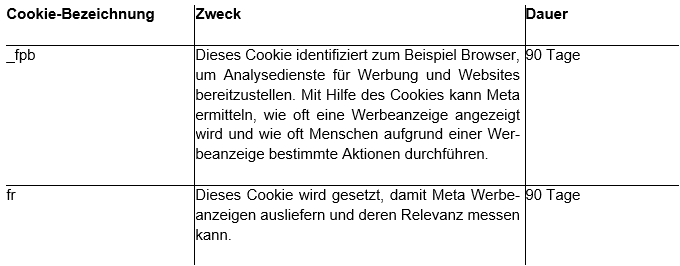
Nachverfolgung der Aktivitäten unserer Website-Besucher sowie Analyse, Optimierung und Personalisierung unserer Werbeanzeigen einschließlich Conversion Tracking Genutzte Technologien
Pixel (JavaScript-Code-Schnipsel) und Cookies
Verarbeitete Daten
Aufgerufene Internetseiten, Referrer-URLs, Datum und Uhrzeit des jeweiligen Aufrufs), Anmel-dungen zu Veranstaltungen, Browser und Betriebssystems, IP-Adressen, Standortdaten, pixel-spezifische Daten (Pixel-ID und Kennung des Meta-Cookies), Daten über alle Schaltflächen, auf die beim Websitebesuch geklickt wurde, und die Seiten, auf welche der Websitebesucher weitergeleitet wurde. Rechtsgrundlage
Einwilligung, Art. 6 Abs. 1 S. 1 lit. a, § 25 Abs. 1 TDDDG Übermittlungen an Drittländer
Die von Meta erhobenen Daten werden auch an Drittstaaten außerhalb des EU-/EWR-Raums übermittelt und dort verarbeitet. Meta übermittelt Daten an Drittstaaten entweder auf Grundla-ge eines Angemessenheitsbeschlusses der Europäischen Kommission im Sinne von Art. 45 Abs. 1 DSGVO oder auf Grundlage von Standardvertragsklauseln, die von der Europä-ischen Kommission genehmigt wurden. Meta Platforms, Inc. (USA) ist gemäß dem EU-U.S. Data Privacy Framework zertifiziert. Datenübermittlungen in die USA werden insoweit auf das EU-U.S. Data Privacy Framework und den dazugehörenden Angemessenheitsbeschluss der Europäischen Kommission gestützt. Datenschutzbestimmungen des Verarbeiters https://www.facebook.com/privacy/policy/?entry_point=data_policy_redirect&entry=0 https://developers.facebook.com/docs/meta-pixel https://www.facebook.com/privacy/policies/cookies
Marketing einschließlich personalisierter Werbung (Google Ad Grants)
Verarbeitendes Unternehmen und Empfänger der Daten
Google Ireland Limited, Google Building Gordon House, 4 Barrow St, Dublin, D04 E5W5, Ir-land („Google“) Zwecke der Datenverarbeitung
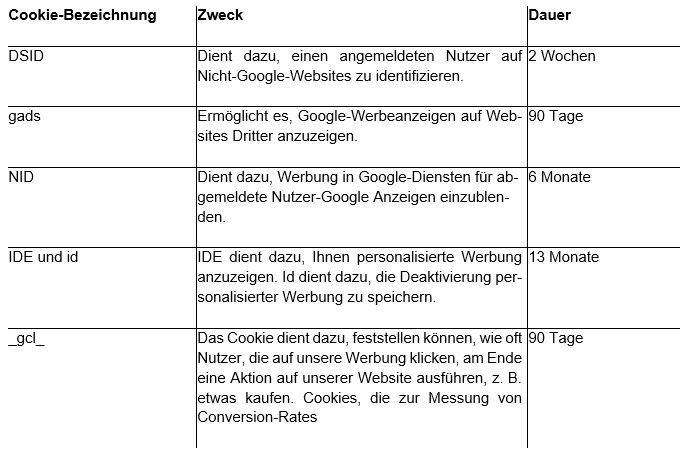
Wir nutzen Google Ad Grants, um auf uns (die DTG) über Werbeanzeigen auf externen Web-sites aufmerksam zu machen und um über unsere Werbeanzeigen statistische Analysen zu erhalten. Mit Google Ad Grants können wir den Erfolg unserer Werbemaßnahmen messen und unsere Werbung so besonders zielgerichtet gestalten. Genutzte Technologien
Verarbeitete Daten
Google erhebt unter anderem die folgenden Daten: Eine Zeichenfolge, anhand derer ein Browser, ein Gerät oder eine App eindeutig identifiziert werden kann (Eindeutige IDs), Einstel-lungen und Typ/Version des Browsers, des Geräts und/oder der App, das Betriebssystem, IP-Adresse, Standortdaten, Inhalte und Werbeanzeigen, mit denen Sie interagieren, ggf. wie Sie ihre Maus über die Werbeanzeige bewegen und mit der Werbeanzeige oder der Internetseite interagieren, die Anzahl der Ad Impressions pro Platzierung (Frequency), die letzte Impression (relevant für Post-View-Conversions) und OptOut-Informationen (Markierung, dass der Nutzer nicht mehr angesprochen werden möchte). Rechtsgrundlage
Einwilligung, Art. 6 Abs. 1 S. 1 lit. a, § 25 Abs. 1 TDDDG Übermittlungen an Drittländer
Die von Google erhobenen Daten werden auch an Drittstaaten außerhalb des EU-/EWR-Raums übermittelt und dort verarbeitet. Google übermittelt Daten an Drittstaaten entweder auf Grundlage eines Angemessenheitsbeschlusses der Europäischen Kommission im Sinne von Art. 45 Abs. 1 DSGVO oder auf Grundlage von Standardvertragsklauseln, die von der Europä-ischen Kommission genehmigt wurden. Google LLC ist gemäß dem EU-U.S. Data Privacy Framework zertifiziert. Datenübermittlungen in die USA werden insoweit auf das EU-U.S. Data Privacy Framework und den dazugehörenden Angemessenheitsbeschluss der Europäischen Kommission gestützt. Datenschutzbestimmungen des Verarbeiters policies.google.com/privacy policies.google.com/technologies
Analyse (Google Analytics 4 )
Verarbeitendes Unternehmen und Empfänger der Daten
Google Ireland Limited, Google Building Gordon House, 4 Barrow St, Dublin, D04 E5W5, Ir-land („Google“) Zwecke der Datenverarbeitung
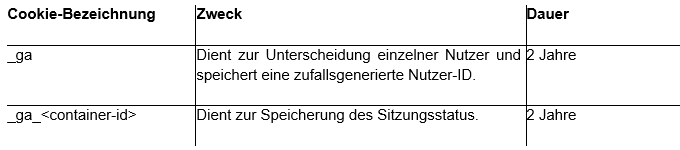
Google Analytics 4 ist ein Analysedienst, der die Erstellung und Auswertung geräteübergrei-fender Statistiken und pseudonymisierter Nutzungsprofile über Ihren Website-Besuch ermög-licht. Wir können so wiederkehrende Besucher erkennen und deren Interaktionen mit der Website auswerten und so unser Angebot bedarfsgerecht gestalten und verbessern. Genutzte Technologien
Cookies
Verarbeitete Daten
Nutzer-ID, Nutzungs- und Sitzungsdaten (z.B. aufgerufene Seiten, Verweildauer, Klicks, Scroll-tiefe, Absprungrate, Bestellungen/Buchungen und andere spezifische Ereignisse), Standortda-ten, technische Daten (z. B. Betriebssystem, Internetanbieter, Browsertyp, Geräteinformatio-nen), IP-Adresse) Rechtsgrundlage
Einwilligung, Art. 6 Abs. 1 S. 1 lit. a, § 25 Abs. 1 TDDDG Übermittlungen an Drittländer
Die von Google erhobenen Daten werden auch an Drittstaaten außerhalb des EU-/EWR-Raums übermittelt und dort verarbeitet. Google übermittelt Daten an Drittstaaten entweder auf Grundlage eines Angemessenheitsbeschlusses der Europäischen Kommission im Sinne von Art. 45 Abs. 1 DSGVO oder auf Grundlage von Standardvertragsklauseln, die von der Europäi-schen Kommission genehmigt wurden. Google LLC (USA) und die in den USA ansässigen Tochtergesellschaften sind gemäß dem EU-U.S. Data Privacy Framework zertifiziert. Daten-übermittlungen in die USA werden insoweit auf das EU-U.S. Data Privacy Framework und den dazugehörenden Angemessenheitsbeschluss der Europäischen Kommission gestützt. Speicherdauer
Ihre Daten werden für einen Zeitraum von 14 Monaten gespeichert. Datenschutzbestimmungen des Verarbeiters https://policies.google.com/privacy?hl=de https://policies.google.com/technologies/cookies?hl=de
Verwaltung von Analyse- und Werbediensten (Tag Manager)
Verarbeitendes Unternehmen und Empfänger der Daten
Google Ireland Limited, Google Building Gordon House, 4 Barrow St, Dublin, D04 E5W5, Ir-land („Google“) Zwecke der Datenverarbeitung
Wir nutzen den Tag Manager, um andere von uns genutzte Dienste, beispielsweise Google-Analytics, einfacher zu verwalten und anpassen zu können. Verarbeitete Daten
Google Tag Manager erhebt unter anderem die IP-Adresse und Geräte- und Browserdaten. Außerdem speichert Google Tag das Javascript gtm.js auf Ihrem Endgerät. Das Javascript enthält die Google Tag Manager ID und kann Informationen über den Nutzer auslesen. Rechtsgrundlage
Einwilligung, Art. 6 Abs. 1 S. 1 lit. a, § 25 Abs. 1 TDDDG Übermittlungen an Drittländer
Die von Google erhobenen Daten werden auch an Drittstaaten außerhalb des EU-/EWR-Raums übermittelt und dort verarbeitet. Google übermittelt Daten an Drittstaaten entweder auf Grundlage eines Angemessenheitsbeschlusses der Europäischen Kommission im Sinne von Art. 45 Abs. 1 DSGVO oder auf Grundlage von Standardvertragsklauseln, die von der Europä-ischen Kommission genehmigt wurden. Google LLC ist gemäß dem EU-U.S. Data Privacy Framework zertifiziert. Datenübermittlungen in die USA werden insoweit auf das EU-U.S. Data Privacy Framework und den dazugehörenden Angemessenheitsbeschluss der Europäischen Kommission gestützt. Datenschutzbestimmungen des Verarbeiters policies.google.com/privacy